Why Do Asphalt Cracks Keep Coming Back?
August 16, 2026
When Is Mastic Asphalt Repair the Right Fix for Wide Cracks?
September 14, 2026
Concrete trip hazards can show up in many places around a property, including sidewalks, walkways, parking lots, curbs, entrances and access paths. These uneven or damaged areas might look small at first, but they can create safety concerns for residents, customers, tenants and visitors. They can also make a property look poorly maintained, even when the rest of the site looks clean and cared for.
For HOAs, commercial property owners and residential property owners in Myrtle Beach, concrete problems often come from a mix of weather, soil movement, drainage issues and daily use. When owners understand what causes concrete trip hazards, they can act sooner and help keep their property safer, easier to use and better protected.
What Are Concrete Trip Hazards?
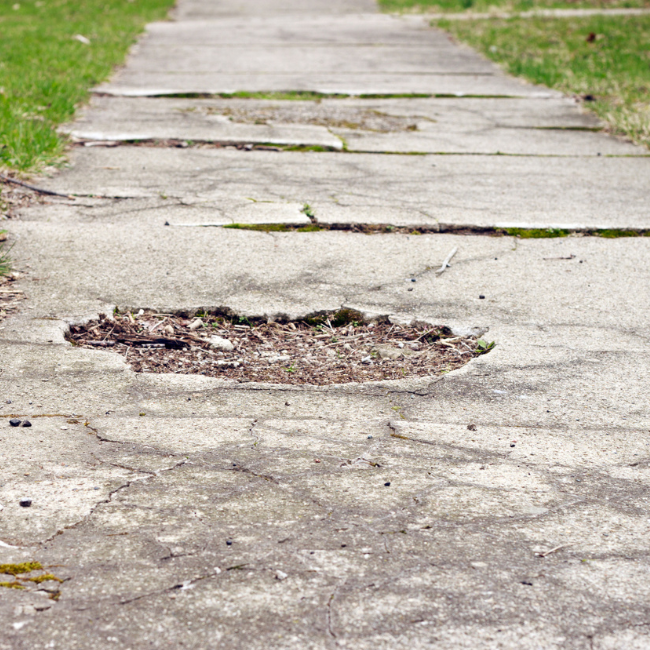
Concrete trip hazards are uneven, cracked or damaged concrete areas that can catch a person’s foot and cause them to stumble. They often appear where one slab sits higher than another, where concrete has cracked, where curbs have broken or where walkways have settled over time. These hazards can happen on sidewalks, parking lot paths, curb ramps, patios, driveways and shared access areas.
A trip hazard does not have to look severe to cause problems. Even a small height difference can create risk, especially in high-traffic areas or places where people walk while carrying bags, pushing strollers or moving around parked cars. That is why property owners should take uneven concrete seriously before the damage gets worse.
Why Does Concrete Become Uneven Over Time?
Concrete becomes uneven when the ground below it shifts, settles or washes out. In coastal South Carolina, heavy rain and changing soil conditions can affect the support under walkways and parking lot areas. Once the base under the slab weakens, one section of concrete can sink while another section stays in place.
Tree roots can also push concrete up from below. This often happens near sidewalks, landscaped islands and curb lines. Over time, that movement creates raised edges, cracked slabs and uneven paths that make walking areas harder to use safely.
How Do Cracked Sidewalks Create Safety Problems?
Cracked sidewalks create safety problems because they break the smooth walking surface people expect. A crack can widen, lift or create loose pieces of concrete that shift underfoot. Once water gets into the crack, the damage can spread and make the walkway even more uneven.
For HOAs and commercial sites, sidewalk cracks can also affect how people move through the property. Residents, customers and guests need clear paths from parking areas to buildings, amenities and entrances. When cracks interrupt those paths, they can create daily frustration along with safety concerns.
Why Do Settled Slabs And Broken Curbs Matter?
Settled slabs and broken curbs matter because they often point to deeper support or drainage problems. A slab that sinks near a parking lot, entrance or walkway can collect water, create uneven steps and make the area harder to navigate. Broken curbs can also affect drainage flow, pavement edges and traffic control.
These issues can make a property look worn down and neglected. More importantly, they can keep getting worse if the source of the problem stays in place. Fixing only the surface might not help for long if water or weak base material continues to move underneath the concrete.
Where Do Concrete Trip Hazards Usually Show Up?
Concrete trip hazards often show up in places that see frequent foot traffic or water movement. Common problem areas include sidewalks near parking lots, curb ramps, building entrances, pool and clubhouse areas, mail kiosk paths, dumpster pads and access routes between parking spaces and doors. Residential driveways and walkways can also develop trip hazards as slabs settle or crack.
In Myrtle Beach-area properties, drainage can play a big role. If water runs across walkways, collects near curbs or washes soil from under concrete, the surface can shift. Regular checks after heavy rain can help owners spot trouble before the area becomes more difficult or costly to repair.
What Should Property Owners Do About Concrete Trip Hazards?
Property owners should inspect concrete areas often and pay close attention to uneven slabs, cracked sidewalks, broken curbs and damaged access paths. When concrete trip hazards appear, the best next step is to find out what caused the movement or damage. That helps determine whether the property needs concrete repair, curb repair, drainage correction or a larger plan.
Taking care of trip hazards helps protect the people who use the property and supports a cleaner, safer appearance. If you notice uneven concrete, broken curbs or walkway damage, call Weaver Construction Services today to schedule an inspection or consultation.
FAQs
1. What is considered a concrete trip hazard?
A concrete trip hazard is any uneven, cracked or broken concrete area that can cause someone to stumble. This can include raised sidewalk edges, settled slabs, broken curbs, cracked walkways and damaged access paths near parking lots or buildings.
2. What causes concrete trip hazards to form?
Concrete trip hazards often form because of soil movement, poor drainage, tree roots, heavy use or water washing out the support under the slab. When the concrete loses support or gets pushed from below, it can crack, lift or settle unevenly.
3. Why should property owners fix concrete trip hazards quickly?
Property owners should fix concrete trip hazards quickly because they can create safety concerns and make the property harder to use. Early repairs can also help prevent larger concrete, drainage or curb issues from spreading across the site.