Asphalt Base Failure Signs That Mean Drainage Problems Are Already Serious
April 14, 2026
Why Parking Lot Crack Sealing Matters Before Summer Storms
May 10, 2026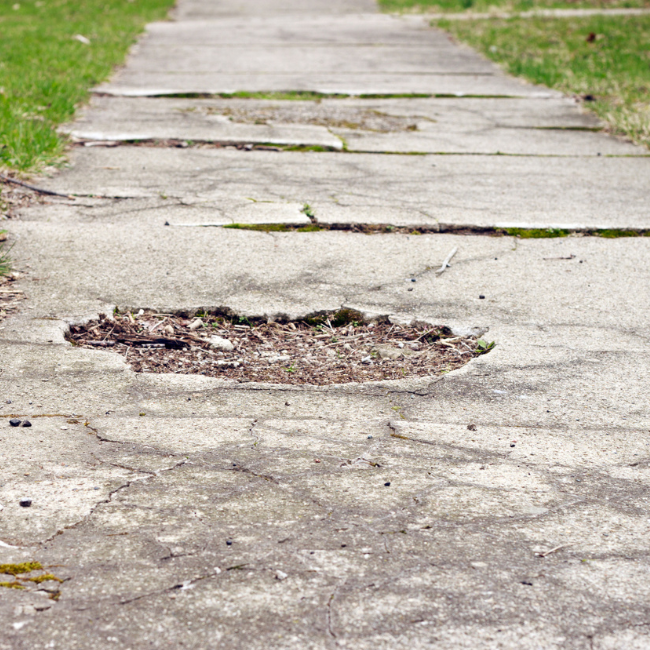
Sidewalk damage often starts small, but it rarely stays that way. A slight lift, a small crack or a shallow dip might not seem urgent at first, but these issues quickly turn into safety hazards and liability risks. For property managers, delaying concrete sidewalk repair can lead to higher costs, complaints from tenants or customers and potential injury claims. Acting early keeps repairs simpler and helps maintain a safe, professional property.
How Concrete Sidewalk Repair Stops Trip Hazards Before They Spread
Trip hazards usually form from a few common causes that build over time. One of the biggest causes is soil settling. When the ground beneath the sidewalk shifts or compacts unevenly, sections of concrete begin to sink or tilt, creating uneven surfaces that people can easily trip over. What starts as a small height difference can quickly become a bigger safety issue if the surface keeps moving.
Tree roots also play a major role, especially in properties with mature landscaping. As roots grow, they push upward against the concrete and lift sections of the walk. In coastal areas like Myrtle Beach, water adds another layer of trouble. Poor drainage allows runoff to wash away soil beneath the sidewalk, which weakens support and leads to cracking, sinking and separation between panels. These issues often work together, which is why damage tends to spread faster than many owners expect.
Why Drainage Problems Make Repairs Fail
Water is one of the main reasons sidewalk repairs do not last. When drainage is poor, water continues to move under the concrete even after surface work is done. That ongoing movement weakens the soil and causes the same trip hazards to return, which leads to repeat repairs and higher long-term costs.
Proper drainage control helps protect the base under the sidewalk. When water flows away from the surface instead of pooling or washing underneath, the soil stays more stable and repaired sections hold up much longer. That is why drainage should always be part of a thoughtful repair plan instead of an afterthought.
Which Repair Options Make the Most Sense
There are several effective ways to fix damaged sidewalks, and the best option depends on the severity of the issue and what caused it. Grinding works well for minor height differences where one section sits slightly higher than another. This method smooths the surface and removes the hazard without replacing the entire section, which makes it a practical choice for limited damage.
For more serious problems, replacing sections of concrete provides a stronger and longer-lasting solution. This option gives contractors the chance to correct base issues and improve drainage at the same time. In some cases, grading changes or water redirection are also needed to keep the same damage from coming back. When the repair addresses both the visible surface and the hidden cause below it, the results last much longer.
Plan Repairs Before Problems Get More Expensive
Sidewalk damage does not fix itself, and waiting usually makes the problem worse. Property managers who address issues early can avoid larger repairs, reduce liability risks and keep their property looking clean and well maintained. Taking action now also makes it easier to schedule work before busy seasons fill up.
If you want to protect your property and avoid repeat damage, call Weaver Construction Services today to schedule a sidewalk inspection and get a repair plan that lasts.
FAQs
1. What causes uneven concrete sidewalks?
Uneven sidewalks usually result from soil settling, tree root growth or water washing out the base beneath the concrete.
2. Can sidewalk trip hazards be fixed without replacing the whole section?
Yes. Minor issues can often be corrected through grinding, which smooths out height differences and removes the hazard.
3. Why do sidewalk repairs fail over time?
Repairs often fail when drainage problems are not addressed. Water continues to weaken the base, which causes the damage to return.